
Dr. Steven Resnick
How I got here
BEAT 01
Ryan. The year the hospital chose me.
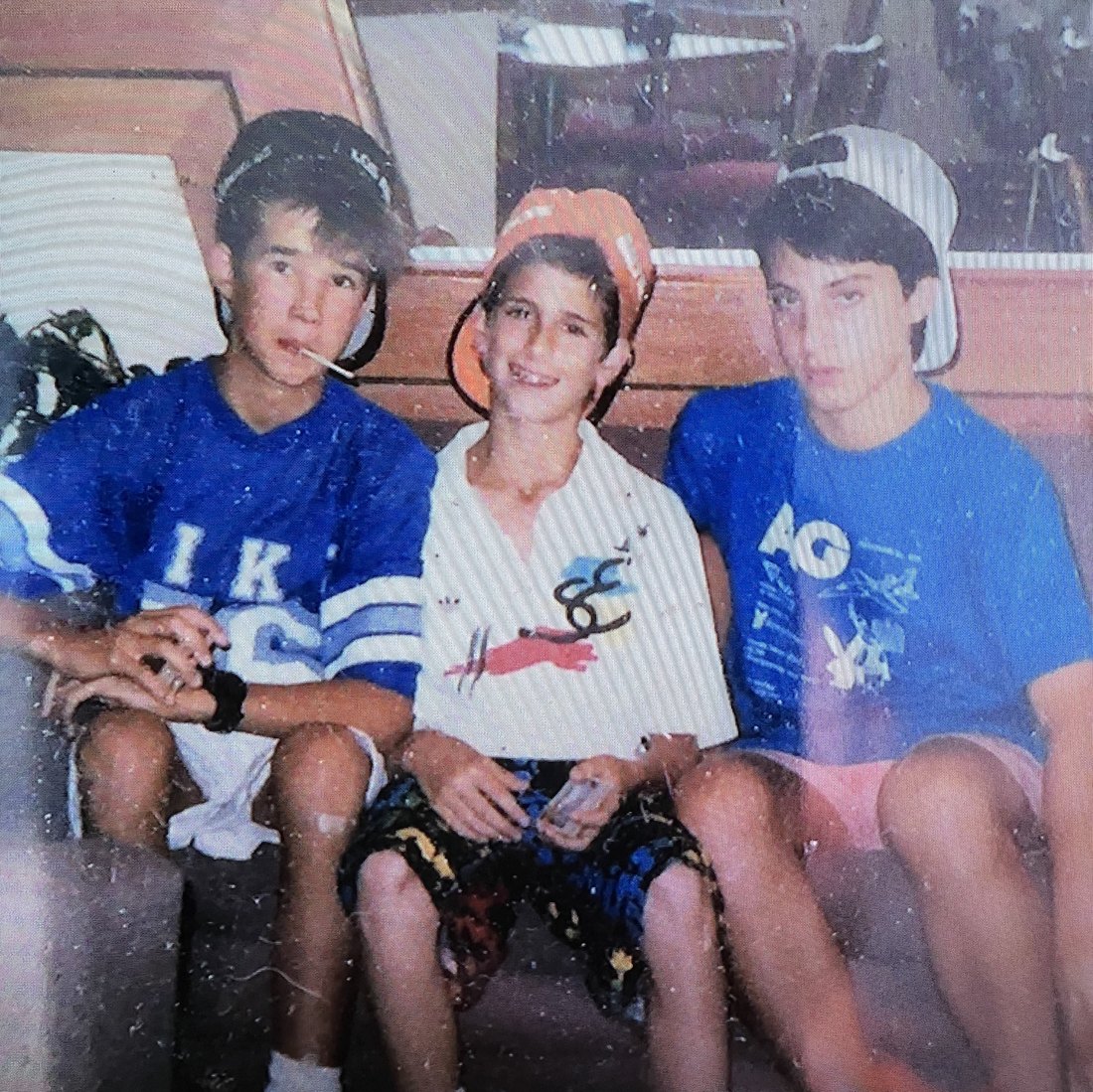
South Florida, 1987. We are thirteen. My two best friends are Jason and Ryan. We are on a bench. I am in the middle. Jason is on my left. Ryan is on my right. We do not yet know that life is about to start sorting us.
Three years later, when we were sixteen, Ryan was in a car accident. Severe brain injury. They took him to Jackson Memorial Hospital. He suffered seizures. He was in a prolonged coma. They told his family he was critical. The prognosis was poor.
He miraculously recovered.
I visited him frequently throughout high school. I expected the building to scare me. The opposite happened. I felt at home. I felt curious. I was drawn to the medical specialty. I was drawn to the brain.
Ryan carries a seizure disorder to this day. He carries the thing that almost took him.
I did not know yet that I was going into neurology. The hospital chose me first.
BEAT 02
My grandfather. The teacher with pain inside.
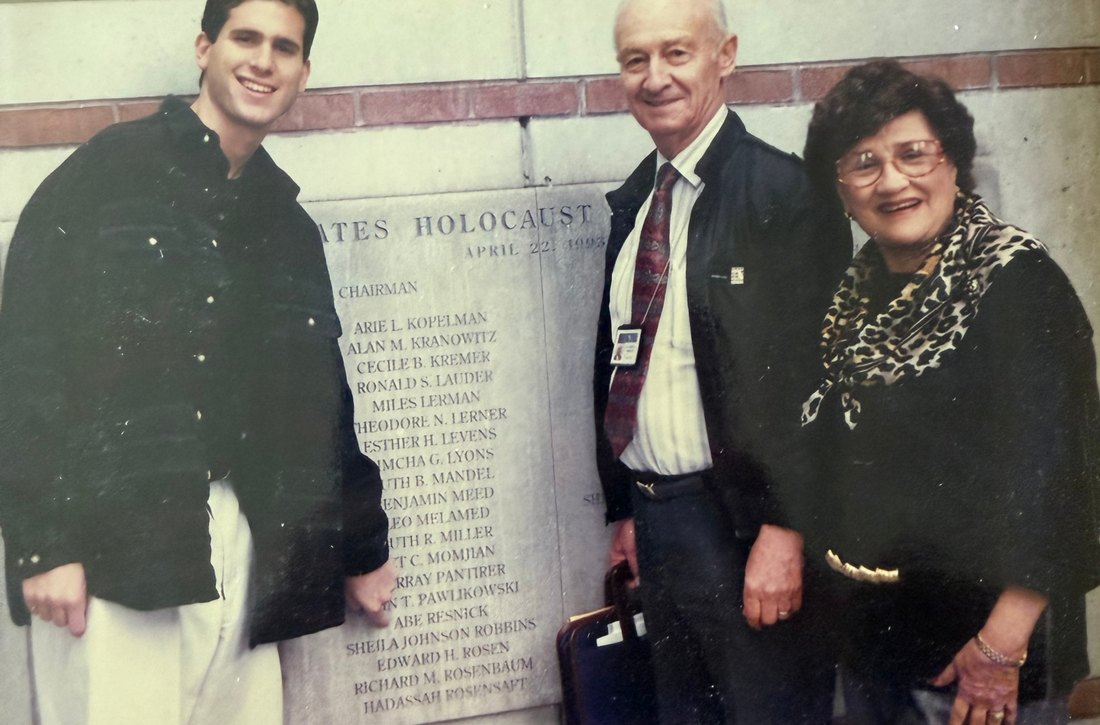
My grandfather survived the Holocaust. He lost his parents and his siblings.
He did not stay silent. He spoke. He taught. He told me about community. He told me about education. He told me about resilience. He built a successful business. He left Europe, went to Cuba, met my grandmother there, and brought her to Miami.
But the pain stayed inside him. I felt it. I still believe it contributed to the cancer that came for him later in his life. Trauma is epigenetic. The body keeps the record even when the voice has done its work.
Years later, when I was just starting medical school, I slept by his bed in the hospital. The cancer had spread. He had a stroke as a complication. At Mount Sinai Medical Center. The same hospital where I had been born. There was no treatment for stroke then.
The friend I had visited as a teenager had survived. The man who had taught me what survival meant did not.
I was helpless. That feeling is the reason I became a Vascular Neurologist. And the reason that, years later, I would walk back into that same hospital as Chief of Neurology.
BEAT 03
Choosing the brain. The counterintuitive choice.
Medical school. Everyone asks the same question. What kind of doctor will you be.
I kept coming back to one answer. The brain.
When I told my colleagues, they pushed back. Why neurology. You cannot do anything about it. You just diagnose.
I am a counterintuitive thinker. When people tell me something cannot be done, I take it as a signal to do it. Neurology is now one of the biggest markets for therapeutics in medicine. They were wrong then. They are wrong now.
But the deeper reason was not therapeutics. The brain weighs two to three pounds. It runs everything. Every memory. Every emotion. Every breath. Every decision. Holding a brain in your hands for the first time is breathtaking.
The brain is where the body keeps its records. I wanted to read them.
BEAT 04
Jackson Memorial. The hospital that took care of Ryan.
Jackson Memorial. University of Miami. The same hospital that had taken care of Ryan after his accident. One of the top trauma centers in the country. One of the largest county hospitals in the country. I rotated through the trauma center. I wanted to see and learn everything I could.
Internal medicine first. The whole body. Diabetes. Heart disease. The kidneys. The lungs. Before I could specialize in the brain, I had to know what was talking to it.
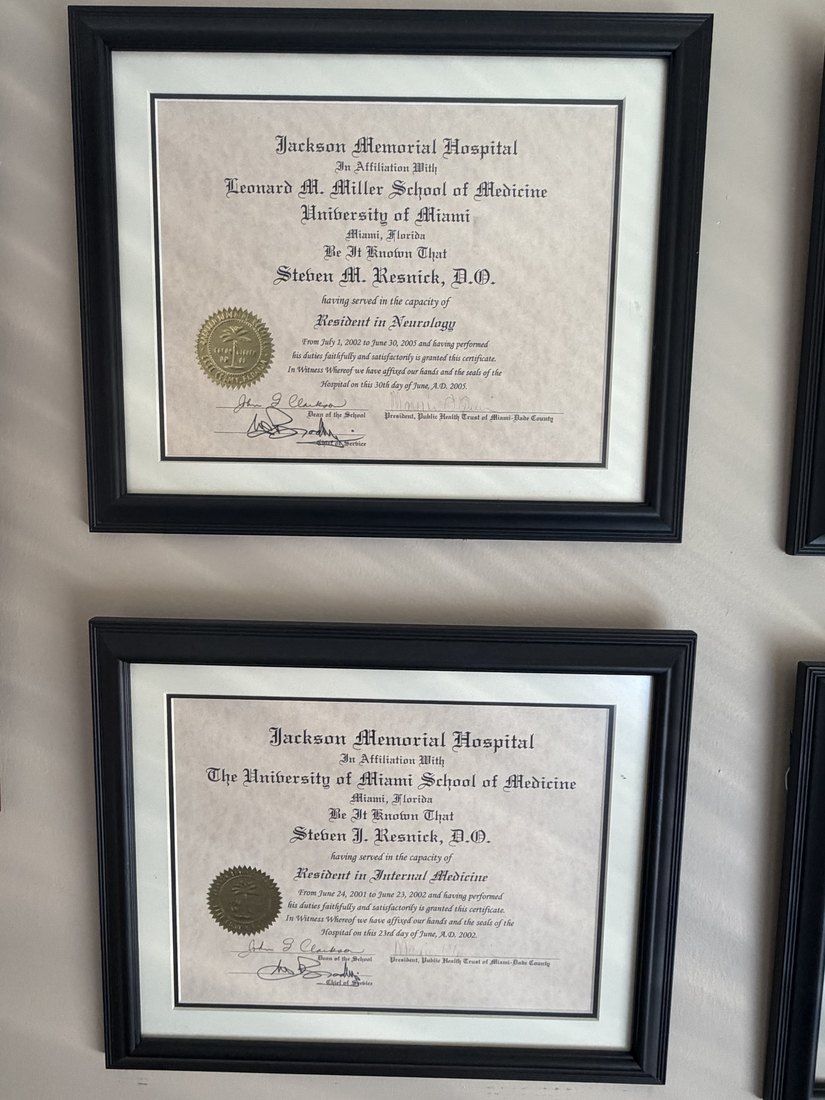
The diplomas are on the wall. They are the proof that the system trusted me to do this work.
They are not the reason I do it well. The reason is what was happening in the rooms in between.
BEAT 05
The men who taught me. Bradley Rounds.
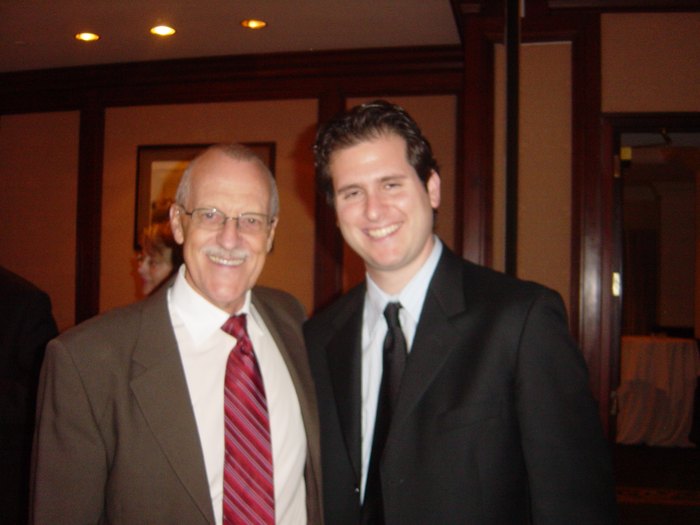
Then three years of neurology residency. I trained under mentors who shaped me.
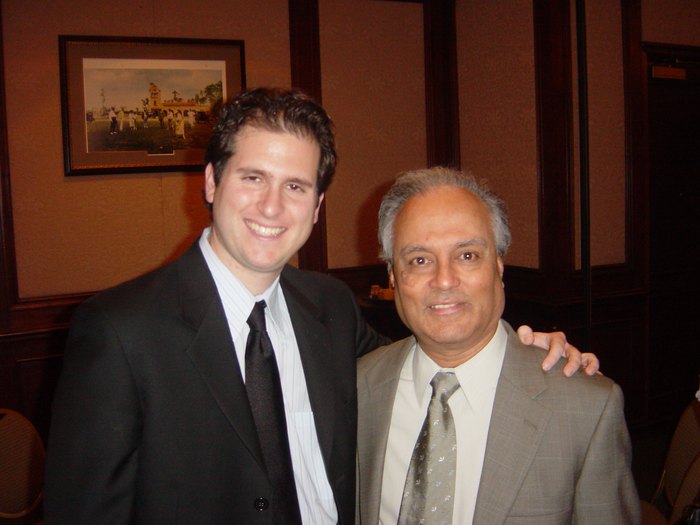
Dr. Ram Ayyar, who is no longer with us. He taught me the art of the Neurological Exam.
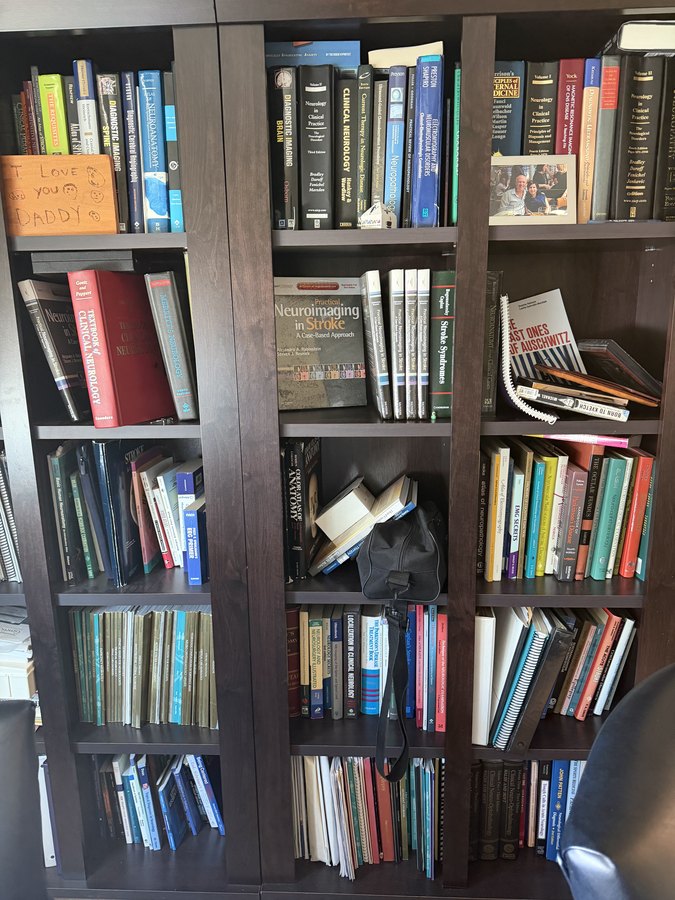
Dr. Walter Bradley, the previous chairman, who wrote the textbook I still keep on my shelf. He ran what we called Bradley Rounds. We wheeled the patient's bed into the conversation. The patient was in the room with us, not outside of it. That is where I learned bedside manner. From a man who taught me that the patient is the center of the case, not the chart.
Residency does not teach you neurology. Residency teaches you humility. You walk into a room thinking you are the doctor. You walk out remembering you are a student.
BEAT 06
Head to toe. Vascular Neurology, then Neuromuscular.
After residency, I became board-certified in Vascular Neurology. Stroke. I had to learn the brain from the top down before I could learn the rest.
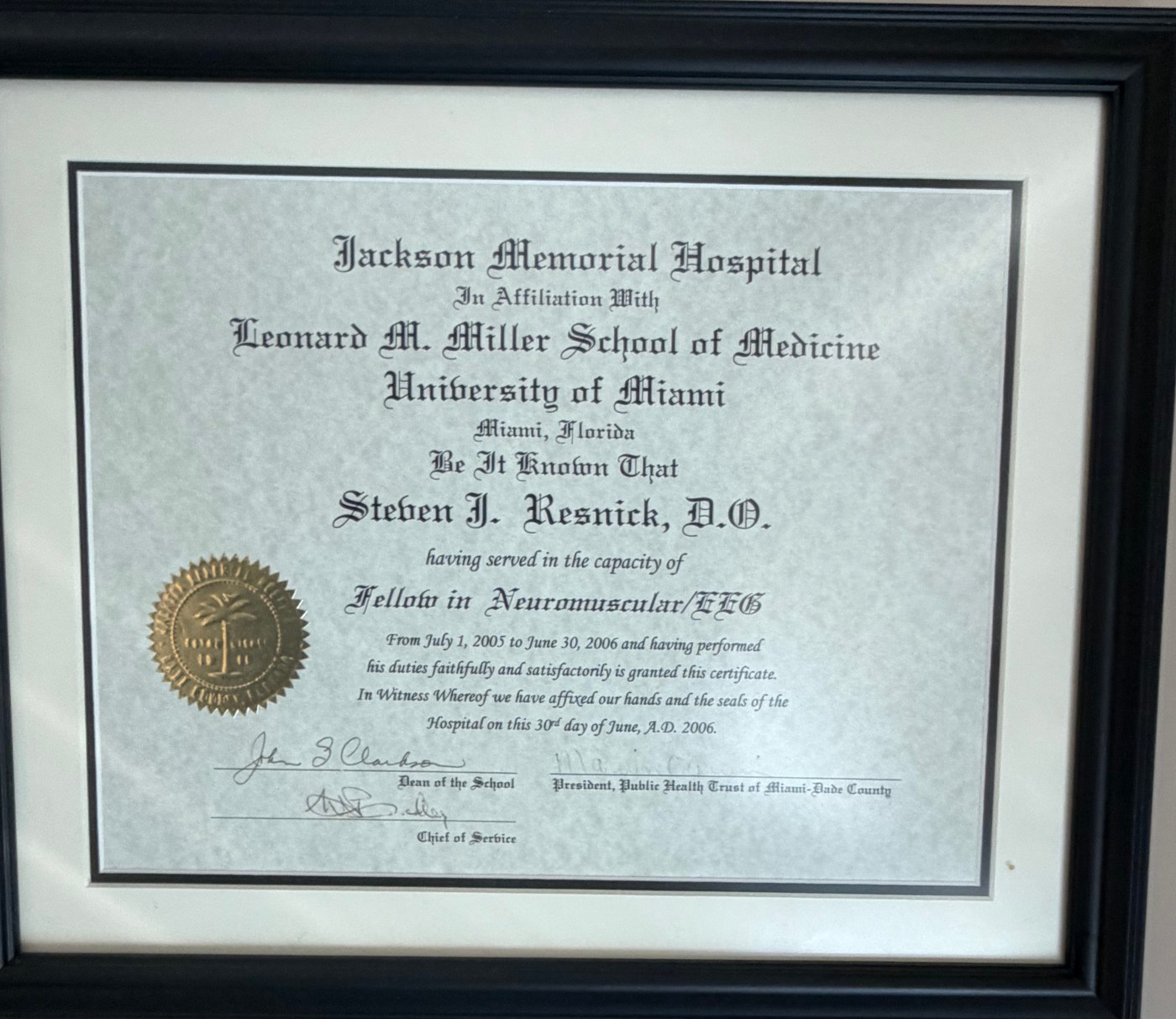
Then I went to fellowship to learn the peripheral nervous system. Neuromuscular disease. EMG. The wiring between the brain and the body. Head to toe.
Most doctors specialize to narrow. I specialized to widen.
If the brain is talking to every organ, I wanted to be the one who could read the conversation.
BEAT 07
The book.
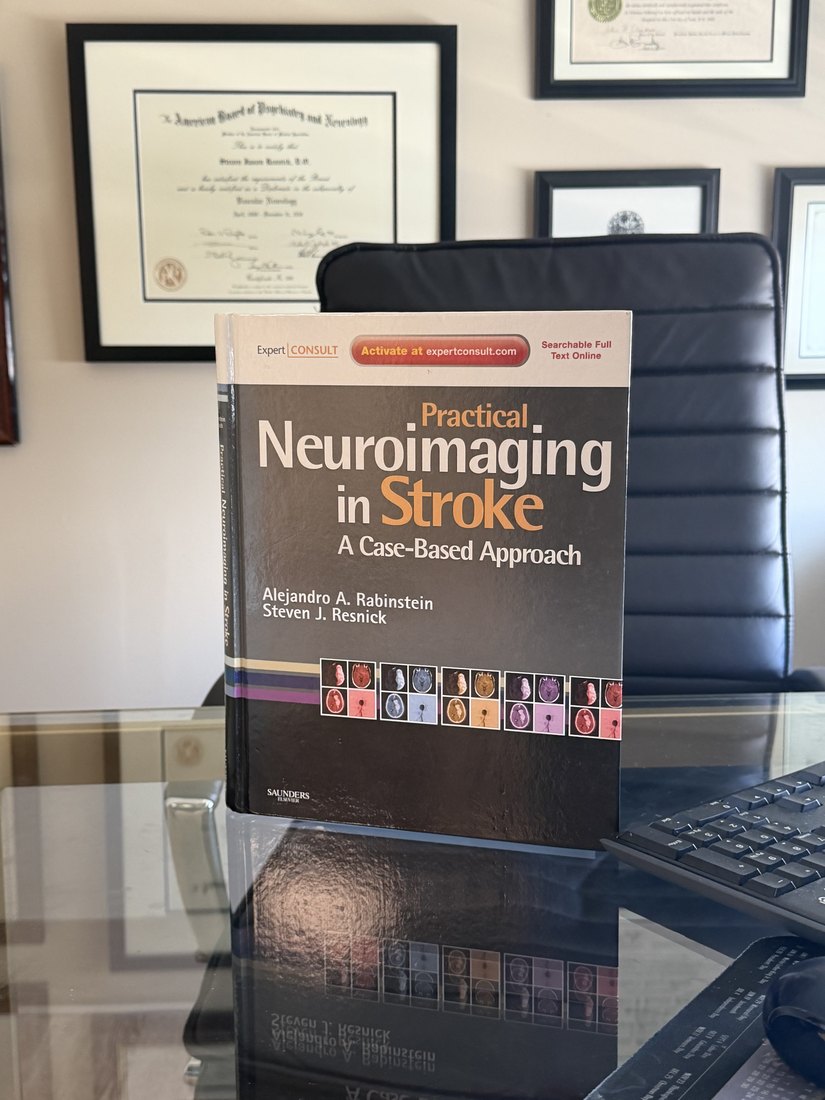
Being an author had always been part of the plan. I co-authored a textbook with Dr. Alejandro Rabinstein. Practical Neuroimaging in Stroke. It teaches radiologists and neurologists how to read the brain after the worst day of a patient's life.
Writing it taught me something else. There is what the scan shows. And there is what the patient feels. Both are real.
I am writing my second book now.
This one is for everyone.
BEAT 08
Mount Sinai. The full circle.
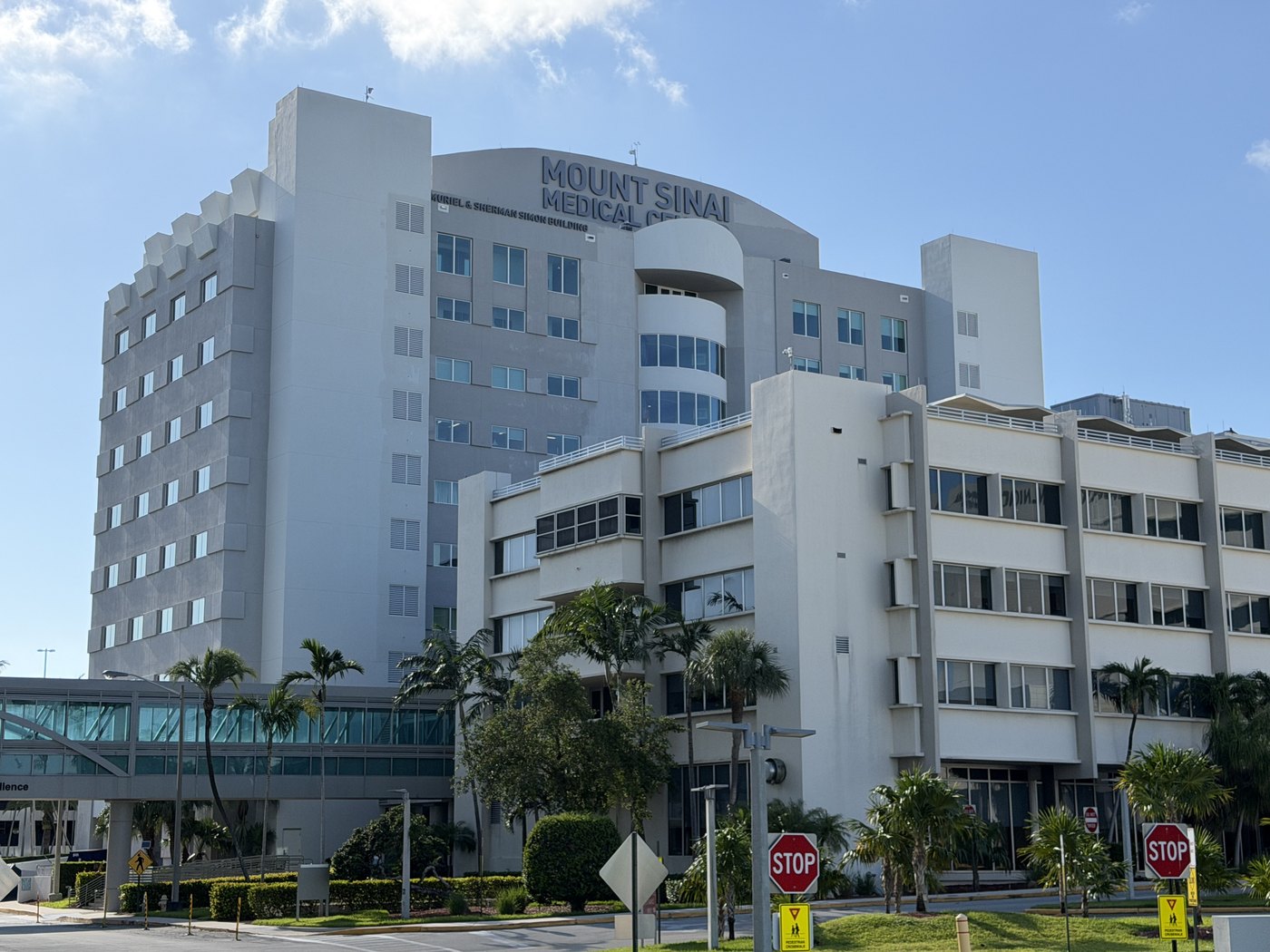
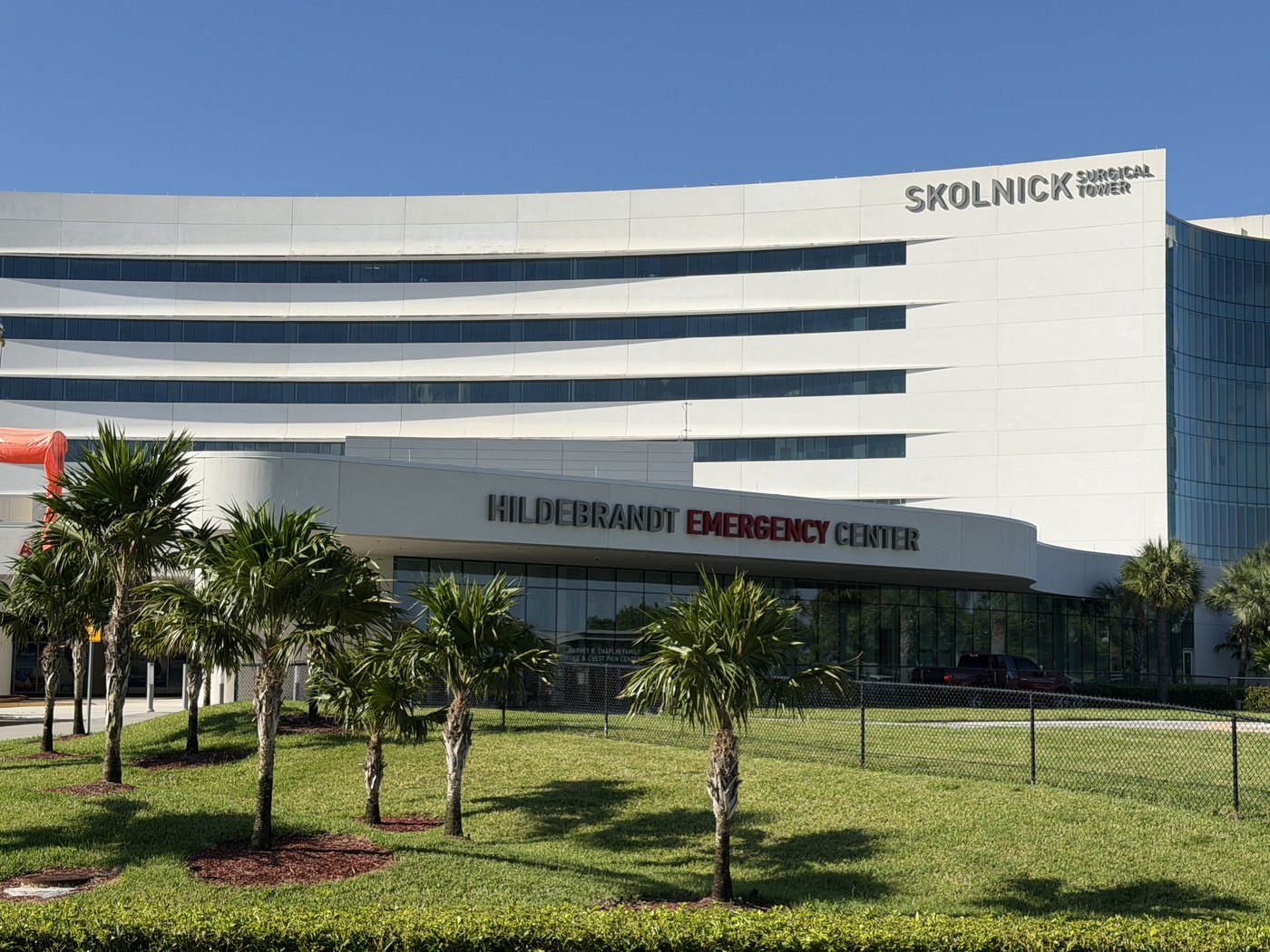
After fellowship, I joined a private practice connected to Mount Sinai Medical Center. The same hospital where I had been born. The same hospital where I had lost my grandfather to a stroke. I did not plan it that way. The path took me there.
I became Stroke Medical Director, then Chief of Neurology. Under my leadership, this hospital became a Comprehensive Stroke Center, and a US News top neurology program in the country. I also built one of the largest private practice neurology groups in South Florida.
And then, during the pandemic, my grandmother had a stroke. The same grandmother who came from Cuba. The same grandmother who wanted, more than anything, to give me an education.
They brought her to Mount Sinai. The same hospital where my grandfather had died. The same hospital where I had been born. The same hospital where I now ran the stroke program.
The phone rang and I was suddenly not the neurologist. I was the grandson again. The same boy who had been helpless years before.
But this time was different. This time the drug existed. I administered the clot-busting medication that I had wished, for my whole adult life, had existed for my grandfather. I gave her back what I had not been able to give him. I was no longer helpless.
The titles came later. The reason came first. He did. She did.
BEAT 09
The pandemic. First responder.
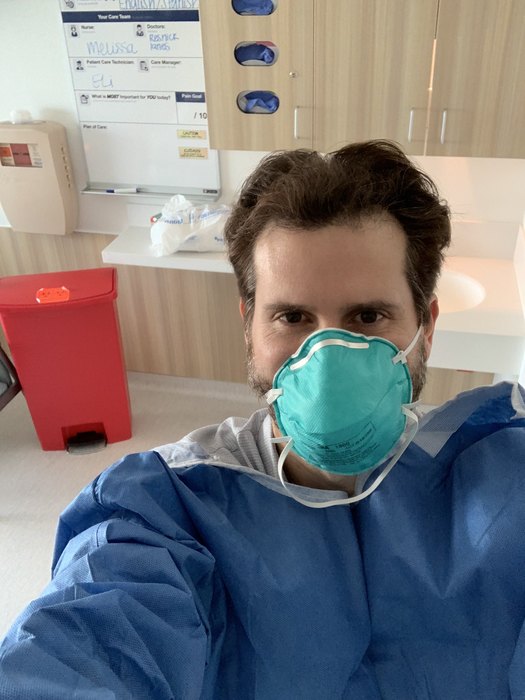
March 2020. The hospital filled up. Miami was a hotspot. We did not know what we were dealing with. We did know who was going to walk into the rooms.
I stepped in. I never shut down. I wore the mask and the goggles and the gown. I took the vaccine when it came. I did the work.
Fear is contagious. Calm is also contagious.
The doctor who stays calm gives the patient permission to.
BEAT 10
What the pandemic taught me. The shift.
The pandemic taught me something I could not unsee.
It was not just the virus. It was the stress around it. The fear of uncertainty. The loss of connection. The patients walking into my exam room with diabetes, with obesity, with autoimmune conditions, all of them hit harder by what was outside the body than by what was inside it.
I started seeing patients with symptoms that conventional neurology could not fully explain. Headaches. Neck pain. Back pain. Dizziness. Jaw pain. Fatigue. Insomnia. GI symptoms. Tingling. Real symptoms. Real nervous system. But the structural explanation did not always exist.
I had been trained to diagnose, to medicate, to refer. That training is still part of my practice. It saves lives every week. But it could not explain everything I was seeing.
So I went back to school. The kind without diplomas.
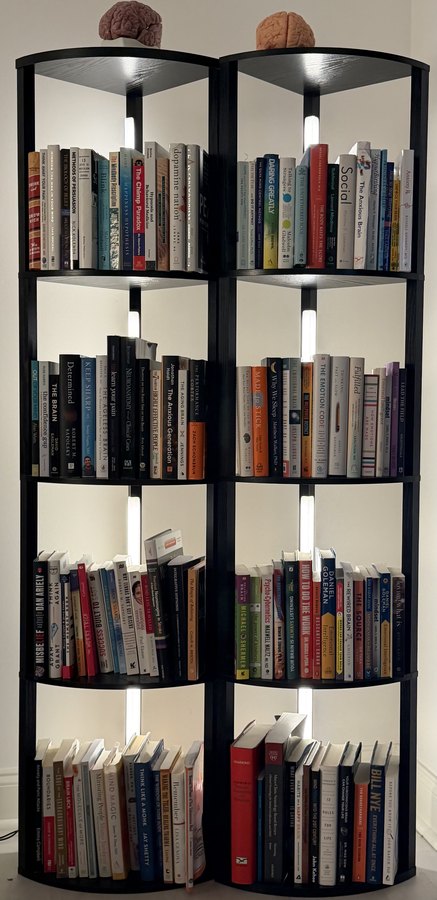
I read everything. Neurology textbooks. Goleman. Sapolsky. Haidt. The sleep researchers. The trauma researchers. I took courses on NLP, on hypnosis, on belief change. On one shelf there is a wooden plaque made for me by one of my three sons. It says I Love You Daddy. It sits next to Bradley's textbook. The textbook and the plaque. The neurology and the humanity. Neither one works without the other.
What I learned was this. The brain's main job is not to feel happy. The brain's main job is to keep you safe, secure, and alive. Modern life, with its information overload and its loss of connection, is asking the brain to do a job it was not designed for. The body finds a way to tell us. Through anxiety. Through depression. Through diabetes. Through heart disease. Through stroke. Through autoimmune disease.
Different organs. One spectrum.
BEAT 11
The marriage therapist who came to my exam room.
One day, a marriage therapist sat down in my exam room. She was my patient.
I learn from every patient. I always ask what they do, what they see, what they have learned. So I asked her: what is the most common problem you see in marriages?
She told me this. The wife wants to be heard and understood. The husband wants to fix.
I sat with that for a moment. Then I realized something I did not want to realize. I was the husband. I was the doctor who wanted to fix. I had been trained for it. The whole system was built for it.
I told my residents that morning: we are not going to interrupt our patients anymore. We are going to let them talk. And I learned the art of listening. I started hearing the words I had been missing: scared, fearful, concerned, afraid.
My patients started getting better. Not because the medicine changed. Because the order changed.
As a doctor, I learned that healing begins with listening.
BEAT 12
The bond.
The patients felt it immediately. They started bringing me into their lives, not just their symptoms. They started letting me into who they really were. Their stories. Their subconscious programs. Their beliefs. Their perspectives. Their habits. Their purpose. Their career. Their families.
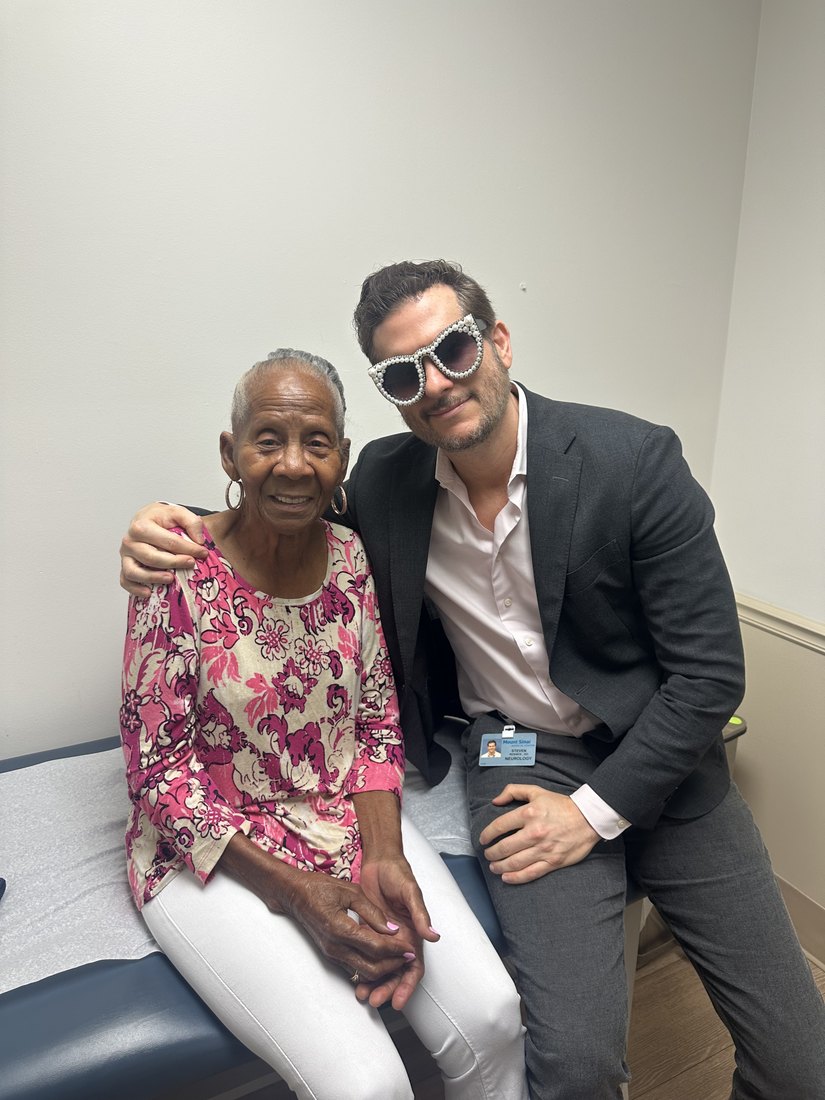
She is one of those patients. She is very fashionable. She has built a beautiful family. One day she let me try on her sunglasses. We laughed in the exam room. I learned something then. The bond is not me bringing the patient closer. It is the patient letting me in.
This is what I have come to believe. The brain, the mind, and the body are not three things to be treated by three specialists. They are one nervous system with three vantage points.
And the patient is not a chart. The patient is a teacher.
BEAT 13
Hundreds of variations on exam paper.
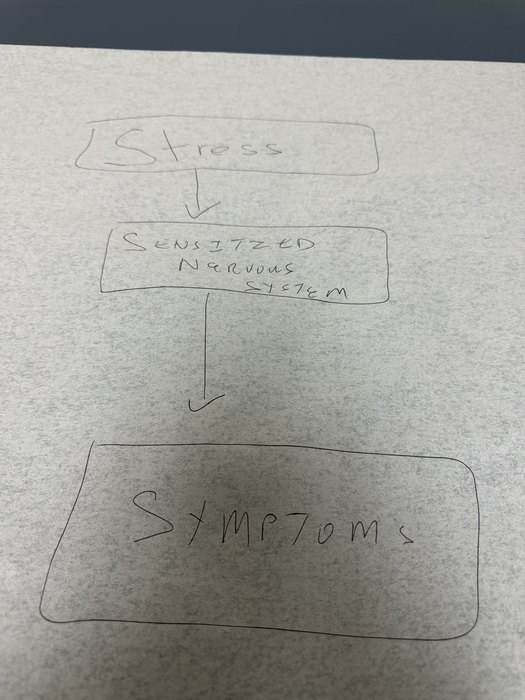
I started drawing it on the exam paper. Stress. Sensitized nervous system. Symptoms. Three boxes. One arrow.
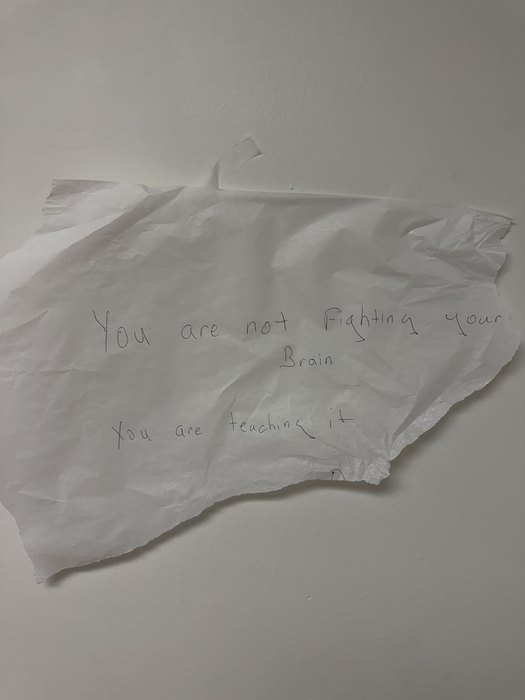
Then I taped a note above the desk. You are not fighting your brain. You are teaching it.
Over the years I have drawn hundreds of variations for hundreds of patients. Each one a little different. Each one made for the person in front of me. I tear it off the exam table. I fold it and hand it to them. They walk out with it in their pocket.
The diagrams end up on refrigerators. On nightstands. On desks. Patients come back to my office without a medication and without a surgery.
That is the part of this work that is the most rewarding.
BEAT 14
My wife. The Healthy Mind. The big room.
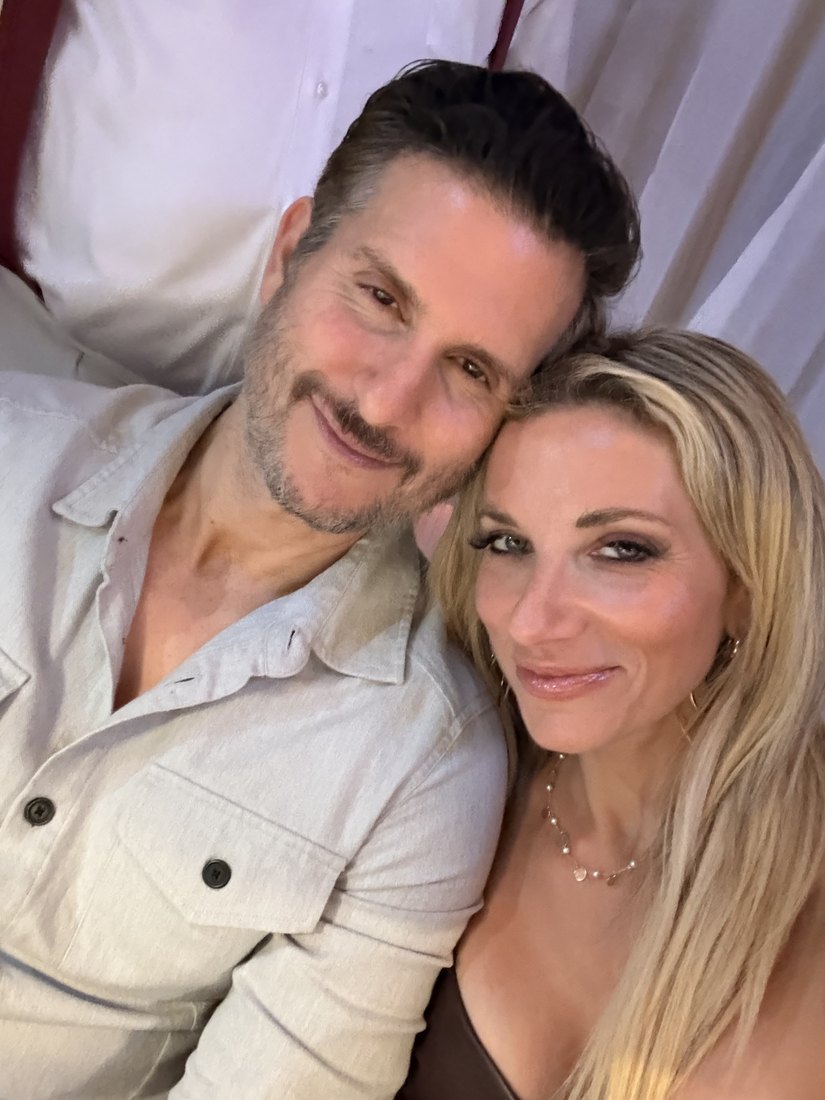
My wife saw it from the inside and the outside. I shared the stories with her at the end of every day. The successes. The patients who came back without the medication and without the surgery. She also heard about it from the community. People stopped her in restaurants, at the market, at events, to tell her what I had done for them.
One day she said: You have a gift. You have been doing this one to one for twenty years. It is time to share it with the world.
That is when I created The Healthy Mind. I started on Spotify. The podcast built a following I did not expect. Then I stepped into social media. I started with no followers. Now I am building it as an education platform.
I want to teach doctors. I want to teach therapists. I want to teach coaches. I want to teach business leaders. I want to teach you.
The work is the same. Listen. Empathize. Validate. Educate. Treat. The patients have always been the teachers. The brain has always been the throughline.
Where I am now
The work that started in the exam room now lives across every surface I teach from. The channel. The podcast. This site. The next book. The patients have always been the teachers. The audience is just bigger now.
The throughline.
Brain. Mind. Body.
One nervous system.
One nervous system.